


COLUMN: Equal on Paper. Invisible at Work.

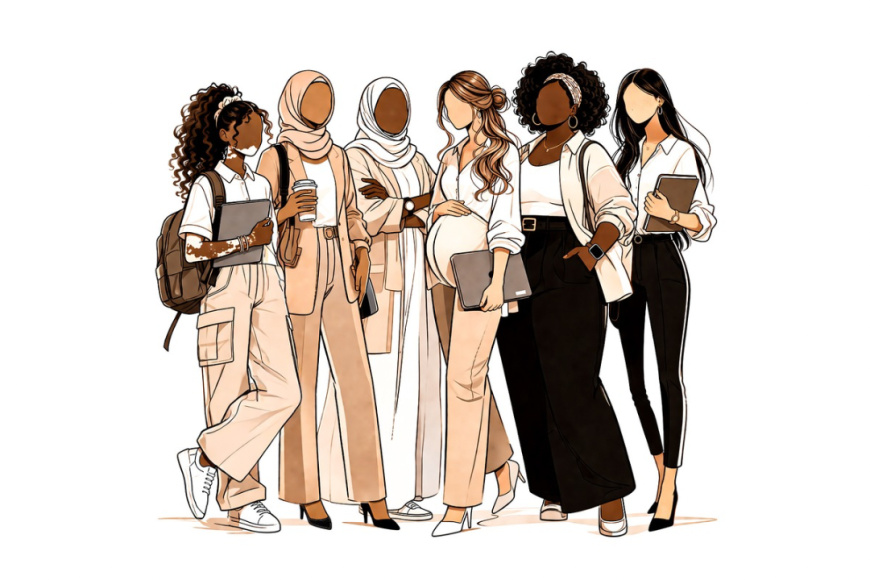
As of early 2024, women occupy only 5% of Maldivian parliamentary seats and earn about 20% less than men, despite the Gender Equality Act of 2016. Men make up 63% of the workforce, while women represent 37%. This reflects a society where qualified women face an unacknowledged glass ceiling, influenced by unconscious bias and selective trust. Women must continually prove their leadership potential, often being overlooked for promotions despite qualifications, due to systems not designed with their advancement in mind.
Sexual harassment in the Maldives is a significant issue, with one in three women reporting violence and one in four experiencing intimate partner violence. Civil society organizations note that workplace harassment is widespread but often underreported due to societal norms that position men as authorities and stigmatize women who speak out. The fear of retaliation, disbelief, and reputational harm deters women from reporting. A proposed 2024 amendment aims to create external complaint pathways, but without a shift in societal attitudes, such measures may not be effective. The silence around harassment reflects a lack of trust in the system, not the rarity of the problem.
Maldivian women face a significant double burden, working 19 hours weekly on domestic tasks over twice the time spent by men, with fewer than 4% of men participating in household duties. Nearly half of households are led by women without income-earning partners, leading to career compromises due to unshared domestic responsibilities. This situation diminishes their time, energy, and recovery needed for ambition, as societal structures assume home management is handled by others, which is often not the case in the Maldives.
Gender bias in the Maldives does not operate in a vacuum. It is reinforced by a patriarchal cultural framework that defines acceptablebehaviour for women in both public andprofessional life, often framed through areligious lens that conflates tradition withobligation. The professional consequences are familiar globally but carry particular forcehere. A direct woman is difficult where adirect man is confident. A woman who leads decisively risks being called aggressive wherea man doing the same commands respect.
Women may be quietly excluded from high-visibility assignments, assumed to be less committed after marriage or motherhood, or simply not taken seriously in technical and strategic spaces where their presence disrupts an established social order. These are notisolated incidents. They are patterns, and theirpower lies precisely in how ordinary they appear. Each individual moment can be dismissed. The accumulated weight of them shapes entire careers.
In the Maldives, women face significant barriers to professional advancement due to limited access to formal networks. With 44% of women in informal employment compared to 36% of men, they often miss out on mentorship and sponsorship opportunities. Advancement relies on connections, and women are frequently excluded from networking and informal introductions that facilitate these relationships. Additionally, geographical constraints hinder women's mobility between atolls, while men migrate for better job prospects, further limiting professional opportunities for women. Consequently, even qualified women may struggle against less qualified male counterparts with stronger support networks.
The five interconnected issues facing women in the workplace illustrate a systemic problem rather than isolated failures. The glass ceiling, double burden, gender bias, harassment, and lack of mentorship all reinforce each other, making it ineffective to address them in isolation. Although the Maldives has laws like the Gender Equality Act and Sexual Harassment Prevention Act, enforcement is inconsistent, and cultural norms persist, leading to a significant gap between legal promises and women's experiences. Real change
requires organizations to critically assess promotion practices, challenge biases, recognize women's domestic realities, and actively open mentorship opportunities. While the Maldives has made strides in education and legislation for women, it must also cultivate a professional culture that respects and values women's ambitions and authority.









What's Your Reaction?