


COLUMN: Raid the Newsroom, Spare the Palace

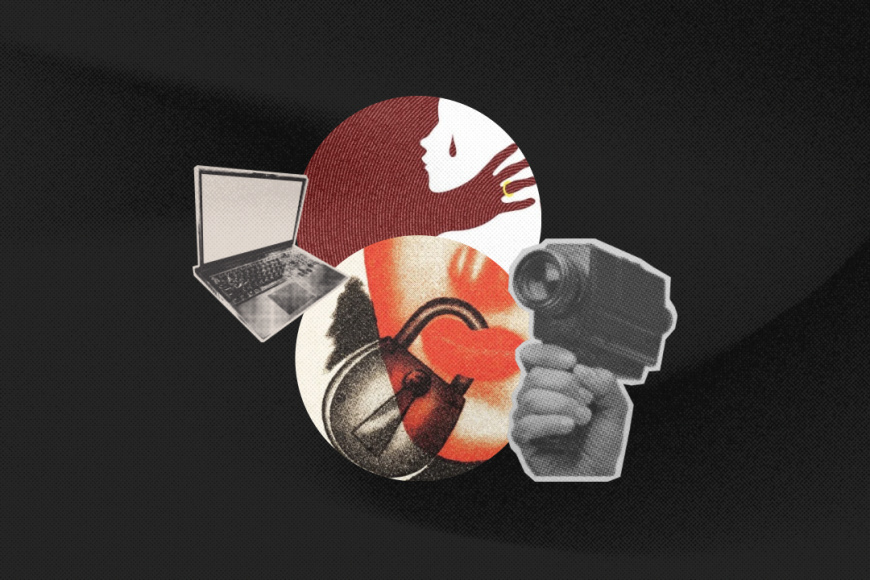
Late into the night, officers from the Maldives Police Service entered the newsroom of Adhadhu with a court warrant, seizing equipment and securing materials tied to a controversial documentary. The speed and scale of the operation signaled urgency. It was decisive, coordinated, and unmistakably forceful.
Authorities have justified the raid as part of a criminal investigation into allegations aired by the outlet, allegations that President Mohamed Muizzu publicly rejected just hours earlier.
On its face, the sequence appears procedural: a complaint is made, law enforcement acts, and evidence is collected. But beneath that surface lies a deeper and far more uncomfortable question about what kind of investigation this truly is.
The Scene That Wasn’t Examined
According to the documentary at the center of the storm, the alleged act did not occur in some unknown or inaccessible place. It points to a specific location, the President’s Office.
In any ordinary investigation, that detail would be critical. It would shape the direction of inquiries, determine what evidence is prioritized, and guide where investigators go first.
Yet there has been no indication that the President’s Office, one of the most secure and heavily monitored buildings in the country has been searched, examined, or even publicly acknowledged as part of the investigative process.
This omission is not minor. It is fundamental.
Because when the alleged scene of an incident is left untouched while the publisher of the allegation is subjected to a raid, the investigation begins to look less like a search for truth and more like a response to speech.
A Denial Followed by Action
Hours before the raid, Mohamed Muizzu stood before the press and dismissed the allegations outright, describing them as false. Public denials are expected in moments of political crisis. What followed, however, is what has drawn scrutiny.
An investigation was swiftly initiated through the Maldives Police Service, culminating in a late-night operation against the very outlet that broadcast the claims. The timeline is tight, the response immediate.
Such speed raises unavoidable questions. When conclusions are publicly asserted before investigative steps are visibly taken, it creates the impression fairly or not that the outcome is already decided. In that environment, the role of law enforcement risks being perceived not as neutral fact-finding, but as enforcement of a narrative.
Law, Burden, and Power
The case is reportedly being pursued under laws relating to Qazf, a serious offense involving false accusations of adultery. The legal implications are profound. Under such a framework, the burden shifts sharply onto the accuser, requiring an exceptionally high standard of proof.
This changes the nature of the investigation itself. It is no longer centered on determining whether the alleged act occurred, but on whether those who reported it can prove it beyond doubt. In practical terms, that places journalists in a precarious position: failure to substantiate a claim at that level can itself become grounds for criminal liability.
In such a context, the absence of any visible effort to examine the alleged location becomes even more significant. If the truth of the claim is not being actively tested where it is said to have occurred, what, then, is being investigated?
An Uneven Application of Scrutiny
The contrast is stark. On one side, a newsroom is entered, devices are seized, and journalists are subjected to legal pressure. On the other, the location identified in the allegation remains beyond the visible reach of investigators.
This imbalance carries consequences beyond a single case. It shapes public perception of institutional independence. It raises doubts about whether investigative standards are being applied consistently or selectively.
In any functioning system, credibility depends not only on what is done, but on what is seen to be done. An investigation that appears to move decisively in one direction while avoiding another risks eroding trust, regardless of its legal justifications.
The Question That Will Not Go Away
The government maintains that this is a matter of enforcing the law. That may well be its position. But law, to retain legitimacy, must be applied with evenness and without hesitation, especially when it leads toward power, not away from it.
Until there is clarity on why the alleged scene of the incident has not been subjected to the same level of scrutiny as the newsroom that reported it, the central question will persist, growing louder with each passing day:
If police can raid a newsroom, why won’t they search the President’s Office?










What's Your Reaction?