


Ihusan’s “Transparency” Doctrine: The Erosion of Constitutional Privacy

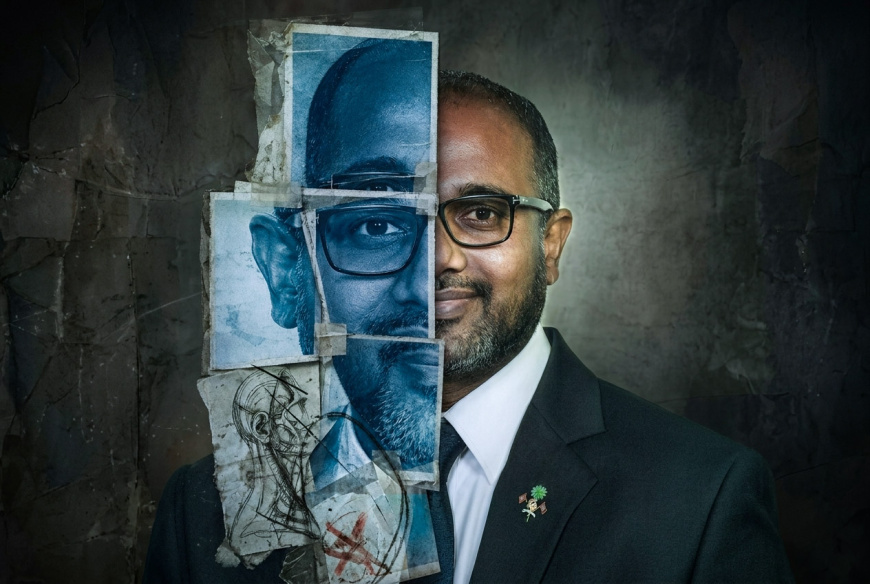
There is a line that separates governance from intrusion. That line is the Constitution. It is the promise that even in death, a person’s dignity will not be stripped away by the very institutions meant to protect them. Under the leadership of Ali Ihusaan, that line is not just being tested, it is being erased.
What is unfolding is not a series of misjudgments. It is not an issue of poor communication or isolated excess. It is a pattern, deliberate, repeated, and increasingly normalized, where the state is using its access to the most intimate details of people’s lives and deaths, and placing them on public display.
This is not transparency. This is exposure, backed by power.
The MNU Case: When Seeking Help Becomes a Public Risk
The latest incident, involving the death of an 18-year-old student at a university hostel, should have been handled with care, restraint, and respect. Instead, it became another stage for disclosure.
Private messages, communications between a vulnerable individual and a national victim support service, were read out and presented publicly. These were not vague summaries. They were detailed, timestamped, and deeply personal exchanges, revealed without any visible regard for the consequences.
This is more than a privacy violation. It is a direct assault on the idea that victims can seek help safely. When the state demonstrates that even confidential support channels are not protected, it sends a chilling message: your most vulnerable moments are not yours, they belong to the authorities, and they may be used at will.
Death in Custody, Broadcast to the Public
The case of Mohamed Jameel should have triggered accountability within the system. A man dies in custody, inside a facility fully controlled by the state and the burden falls squarely on those in charge to answer for it.
Instead, what followed was something far more disturbing. Footage from inside his prison cell, his final moments in a confined, controlled environment was screened to the public.
There is no legitimate interpretation of this as transparency. A prison cell is not a public space. It is a place where the state holds absolute authority, and with it, absolute responsibility. To take footage from that space and broadcast it is not openness, it is the exploitation of a captive individual’s final moments under the justification of public interest.
It is the state saying: even here, even now, there are no limits.
CCTV as a Tool of Narrative Control
The release of private surveillance footage in the case of Hawwa Yumnu follows the same playbook. When scrutiny rises, the response is not accountability through due process, it is selective disclosure.
CCTV footage is not neutral when placed in the public domain. It is powerful, visual, and easily weaponized. Released without context, without oversight, and without consent, it becomes less about truth and more about control about shaping perception before facts are tested in any proper legal setting.
This is not transparency. It is narrative management, executed through the exposure of private lives.
Crossing Into the Intimate: The Vifaq Case
If there was ever a line that should not be crossed, it was crossed in the case of Mariyam Vifaq.
Her mental health history was discussed publicly. Details from her medico-legal examination were disclosed. Most disturbingly, intimate aspects of her physical condition were revealed in an attempt to counter public speculation.
This is not just a violation of privacy. It is an act of institutional humiliation. Medical records are among the most protected forms of personal data anywhere in the world. To publicly dissect them, especially when the individual is deceased, is a level of intrusion that cannot be justified under any standard of governance.
It is not transparency. It is degradation, delivered from a podium.
A System, Not a Mistake
What ties these cases together is not coincidence. It is consistency.
Messages, surveillance footage, medical records, different forms of data, all handled the same way. Collected under conditions of trust or control, then released when it becomes politically convenient. Always justified. Rarely questioned from within.
This is what systemic disregard looks like. Not a single violation, but a method. A practice. A quiet redefinition of what the state believes it is allowed to do.
The Constitution Is Not Optional
Article 24 of the Constitution guarantees the right to privacy. It is not a suggestion. It is not a guideline to be weighed against convenience. It is a fundamental protection, one that does not disappear when a person dies, and certainly does not dissolve when the state finds itself under pressure.
International human rights standards are even clearer. Privacy, dignity, and medical confidentiality are not negotiable principles. They are binding obligations. Any interference must be lawful, necessary, and proportionate.
There is nothing proportionate about publicly releasing private messages. There is nothing necessary about broadcasting prison cell footage. There is nothing lawful about exposing medical details to win an argument.
When Power Goes Unchecked
What is perhaps most alarming is not just what has happened, but how easily it has happened.
No visible safeguards. No clear legal thresholds. No indication that consent matters. No sign that dignity is being weighed against disclosure.
When a state reaches a point where it treats the private lives of its citizens, especially the dead, as material for public consumption, it is no longer operating within the boundaries of accountability.
It is operating on power alone.
This Cannot Be Normalised
If this continues, it will not remain controversial. It will become routine. And that is the real danger.
A society where victims fear exposure more than injustice. Where families must grieve under public scrutiny of intimate details.Where the state decides, unilaterally, what parts of a person’s life and death are made public.
That is not transparency. That is control.











What's Your Reaction?