


The Mask Has Slipped: A Government No Longer Trusted

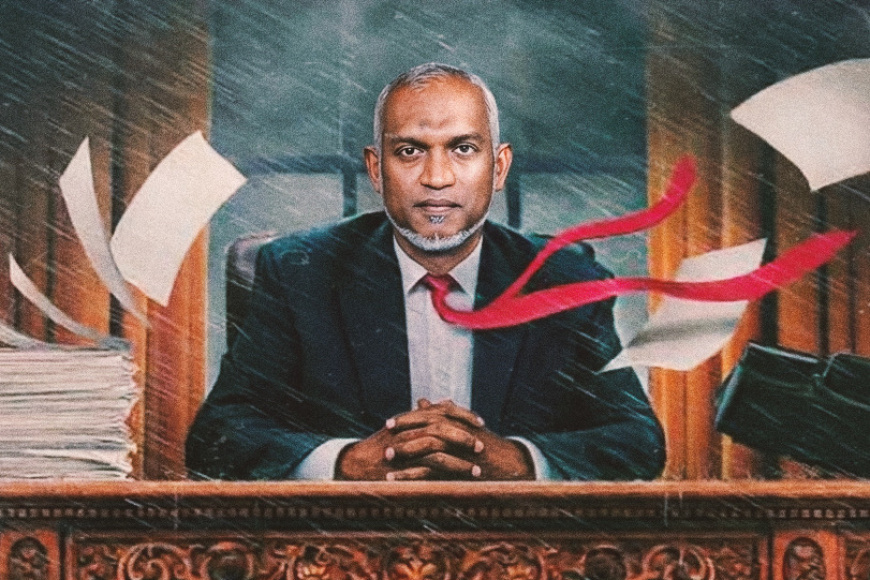
There are moments in politics when the result is not surprising only the scale of it is. What unfolded last Saturday was not an upset. It was an exposure. An exposure of the widening gap between President Mohamed Muizzu, the People's National Congress, and a public that has, quite simply, stopped believing.
Let’s be blunt about what this vote was. It was not about technical amendments to election scheduling. It was not about administrative efficiency. It was not even about opposition strength. It was about trust or rather, the complete erosion of it.
Muizzu did not lose because of a single policy misstep. He lost because people no longer trust him.
There is a growing sentiment across the country, spoken quietly in some spaces and openly in others: that this administration is presenting one face to the public while constructing something far more troubling beneath the surface. People see the polished speeches, the reassurances, the carefully managed image. But they also believe they see the dirt the quiet reshaping of institutions, the consolidation of influence, the decisions made without transparency but defended with confidence.
And that contradiction is what voters rejected.
Governments can survive criticism. They can survive economic hardship. What they cannot survive is the collapse of credibility. Once people begin to believe that what they are being shown is not the full truth, every message from that government is filtered through doubt. Every policy becomes suspect. Every explanation feels incomplete.
That is where this administration now stands.
The referendum became the breaking point not because it was complicated, but because it was mistrusted. A proposal framed as efficiency was received as manipulation. A government asking for structural change was met by a public asking a much simpler question: why should we trust you with more control?
The answer, at least in this election, was clear.
There is also a level of public fatigue that cannot be ignored. People are fed up. Fed up with the gap between rhetoric and reality. Fed up with economic strain that is explained away but not relieved. Fed up with a political tone that often sounds more defensive than accountable. When that fatigue builds, it does not always erupt in protests. Sometimes it shows up more quietly in a ballot, in a rejection, in a refusal to endorse.
And when it does, it is far more consequential.
The urban vote made this unmistakable. Cities do not just swing they signal. They reflect where political consciousness is heading. The shift away from the People's National Congress in these areas was not accidental. It was a deliberate judgment from voters who are watching closely and are no longer convinced.
This was not a rejection of governance alone. It was a rejection of image politics. Of the idea that a government can maintain a clean public face while eroding confidence behind the scenes. That illusion, if it ever held, has now been decisively broken.
And yet, the real test begins now.
Because power has not changed hands. Mohamed Muizzu remains in office. The People's National Congress still holds ground. But authority without trust is a diminishing asset. It may hold in the short term, but it weakens with every decision that fails to rebuild credibility.
The danger for this administration is not the opposition. It is not even future elections. It is the possibility that it no longer has the benefit of belief.
And once that is gone, no referendum, no messaging strategy, no political maneuver can easily bring it back.






What's Your Reaction?