


Controversy Erupts Over Police Use of Sound Weapons at Malé Protest

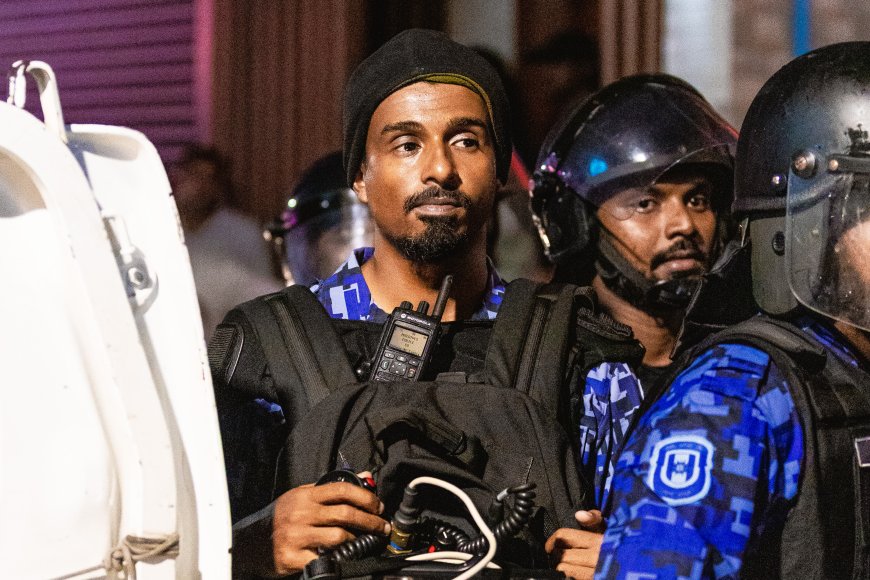
A protest organized by the Maldivian Democratic Party (MDP) in Malé has ignited heated debate after police deployed a Long Range Acoustic Device (LRAD), a powerful sound weapon, against demonstrators in a densely populated residential area.
Eyewitnesses and rights activists claim the device was used “very aggressively” and outside of accepted protocol, with reports of residents, including children and infants suffering from the effects. Health experts warn that exposure to LRAD blasts risks permanent hearing damage.
During the protest, a man identified as Raxlaan reportedly suffered a heart attack following clashes with police officers and was rushed to IGMH in critical condition.
Journalists covering the event also reported being targeted with pepper spray and prevented from moving behind police lines. The Maldives Journalists Association condemned the incidents as a direct assault on press freedom and established a hotline for reporters to log cases of obstruction.
Government officials defended their actions, citing the 2013 Freedom of Peaceful Assembly Act, which requires approval for assemblies held outside designated areas. They said MDP organizers had disregarded both their requested protest route and the alternative approved by police, suggesting “intent not to hold a peaceful event.”
Critics countered that the Maldives Constitution (Article 32) explicitly guarantees the right to peaceful assembly “without prior permission of the State.” Legal experts argue that this constitutional right overrides statutory limitations, making the police justification questionable.
International standards also came under scrutiny. Rights groups noted that the UN Basic Principles on the Use of Force prohibit weapons or tactics that cause unnecessary or disproportionate harm. While the Geneva Conventions technically apply to armed conflict, activists drew comparisons, calling the use of LRAD “inhumane” and potentially amounting to torture.
The events have fueled public anger, with many warning that the use of excessive force may only strengthen the resolve of protesters rather than suppress it.
As of now, questions remain about whether the government’s handling of the protest respected constitutional guarantees and international human rights obligations or crossed the line into abuse.









What's Your Reaction?