


The Collapse at the Core: Why Minister Ihusan’s Security Portfolio Is Failing the Maldives
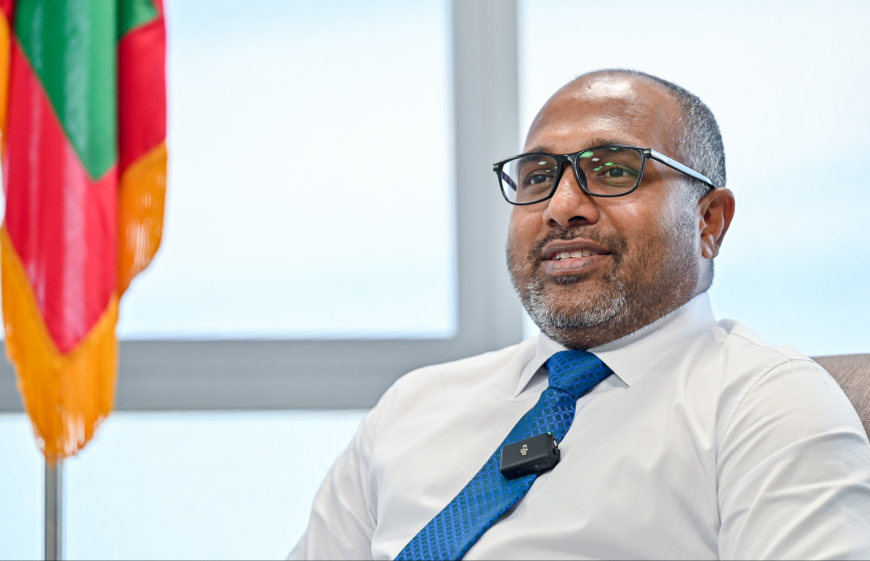
When Ali Ihusan assumed office as Minister of Homeland Security and Technology, he did so with sweeping promises and a firm public posture. He pledged to dismantle drug networks, end organized crime, reform detention systems, modernise policing, and restore integrity to the institutions under his watch. But as his tenure unfolds, the evidence increasingly suggests that internal security in the Maldives is not improving, it is deteriorating. A closer look at developments within the agencies he oversees raises serious questions about whether Ihusan is delivering on the responsibilities of one of the country’s most powerful and sensitive ministries.
A Drug Crisis Escalating, Not Ending
One of Ihusan’s central pledges was to eradicate drugs from the Maldives. Yet the situation on the ground reveals a crisis worsening under his leadership. The country is witnessing an increase in drug overdose deaths, a stark indicator that enforcement and rehabilitation mechanisms are failing. The National Drug Agency (NDA), which falls directly under his ministry, has faced repeated criticism for its inability to expand treatment programmes or adapt to the evolving drug landscape.
Despite the minister’s repeated claims that drug networks are being “controlled,” narcotics remain widely accessible. Outreach workers and families affected by addiction describe a market that is flourishing, not shrinking. This disconnect between the minister’s public assurances and the lived reality of communities has eroded trust and raised doubts about whether the government is truly disrupting the networks fueling the epidemic.
Indefinite Detentions Fueling Public Outrage
Another growing problem under Ihusan’s portfolio is the sharp rise in indefinite pre-trial detentions. Individuals are increasingly being held for prolonged periods without conviction, often due to delayed investigations or administrative inefficiencies. This trend has triggered public frustration and has even sparked a grassroots movement demanding an end to such detentions, which many legal experts argue are unconstitutional and abusive.
The surge in indefinite detention is more than a legal failure; it is a humanitarian and governance failure. It signals a justice system struggling under ineffectual leadership, with vulnerable individuals trapped in a cycle of uncertainty and punishment without verdict. Despite mounting concerns, the ministry has offered no meaningful explanation for the rise, nor outlined reforms to address the systemic weaknesses enabling it.
A Security Breach That Exposed Institutional Collapse
Perhaps the most alarming scandal under Ihusan’s watch was the disappearance of two containers of cigarettes from Customs custody, a high-value consignment under state detention that simply vanished. This incident, which has become known as the “cigarette heist,” revealed severe vulnerabilities within one of the most sensitive institutions under the Home Ministry.
The breach was not discovered through internal monitoring or professional oversight. It came to light only after senior officials, including Ihusan were tipped off through an anonymous WhatsApp message. That two containers could disappear from a supposedly secure facility without detection raises profound questions: How did the theft occur? How many officials were compromised? And most importantly, where was the minister’s oversight?
The scandal exposed what appears to be a deep collapse in internal controls, oversight mechanisms, and accountability frameworks. For a ministry responsible for national security, border control, and enforcement, the episode stands as a damning symbol of mismanagement.
Rhetoric Outpacing Reality
Throughout his tenure, Ihusan has maintained a tough rhetorical stance on crime, drugs, and corruption. But the growing body of evidence suggests that his ministry’s operational capacity has not matched his promises. Drug networks remain active. Overdose deaths are rising. Detentions are increasing without resolution. And Customs, Immigration, and enforcement bodies continue to face allegations of corruption and negligence.
The gap between what Ihusan says and what Maldivians experience on the ground is widening. Families affected by the drug crisis, detainees’ families fighting for due process, and communities frustrated with law enforcement’s failures increasingly view the ministry as part of the problem, not the solution.
A Ministry at a Crossroads
The Home Ministry is the nerve centre of national security. Its failures ripple outward into every corner of society, from the safety of communities to the integrity of state institutions. Under Minister Ali Ihusan, these failures are becoming too frequent and too serious to ignore.
The rising drug deaths, deteriorating detention practices, and major security breaches suggest that the ministry is not improving the country’s internal security landscape. Instead, many indicators point to a system weakening under pressure, drifting without clear direction, and lacking effective leadership.
Maldivians were promised reform, safety, and accountability. What they are seeing instead is a ministry plagued by crises, inconsistencies, and unanswered questions. Whether Ihusan can reverse this trajectory or whether the failures now define his tenure is becoming one of the most pressing debates in Maldivian governance today.







What's Your Reaction?