


Two Years of Muizzu: A Government Built on Hype, Hidden Debt and Hollow Promises

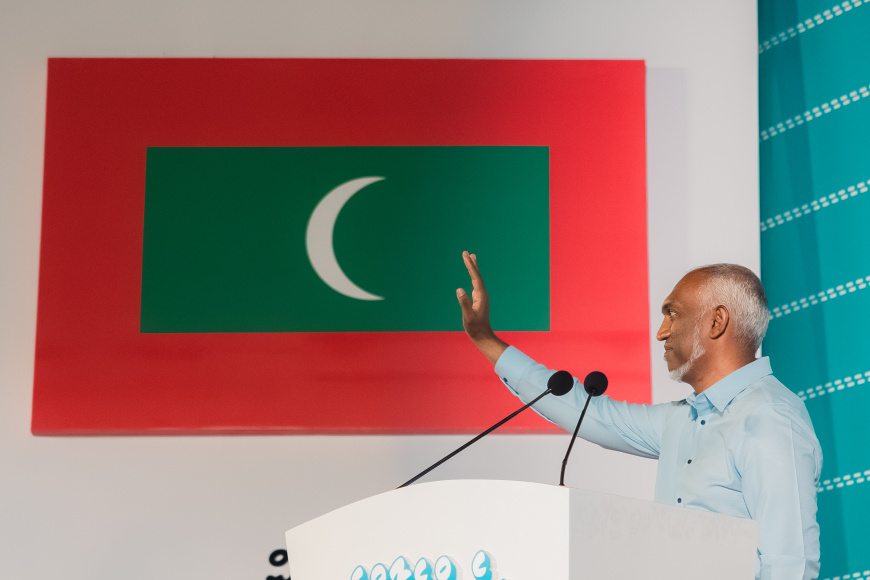
Two years into President Mohamed Muizzu’s administration, the glossy narrative of “transformation” and “new beginnings” has crumbled under the weight of its own contradictions. What remains is a government addicted to announcements, allergic to accountability, and increasingly incapable of delivering the very promises that propelled it into power.
The Muizzu presidency is not merely underperforming, it is failing structurally, and in ways that will haunt the Maldives for years to come.
Mega-Projects, Mega-Hype, Minimal Progress
From the moment Muizzu took office, his strategy was clear: overwhelm the public imagination with projects so large, so futuristic and so symbolically powerful that questions of feasibility seemed almost impolite.
Rasmalé, his supposed “eco-city of the Indian Ocean” was announced with a fantastical eight-month reclamation deadline and a promise of “zero state expenditure.” Two years later, both claims collapsed. Reclamation is incomplete, the original contractor was dismissed under murky circumstances, financing has been quietly shifted onto HDC and the state budget, and the master plan is still being drafted long after dredgers have torn up the lagoon.
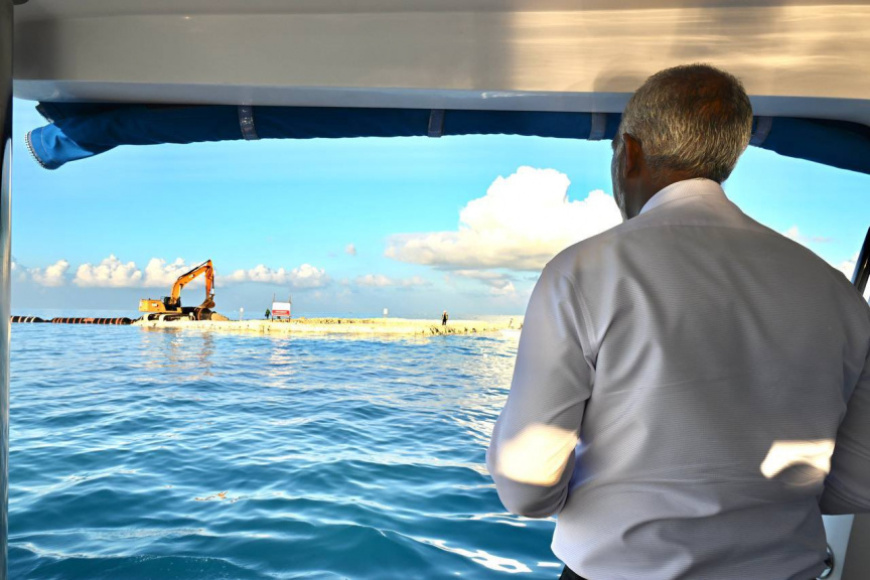
The underwater tunnel, announced with global fanfare as a world-first, has not advanced beyond speeches and animated renderings. No feasibility study. No engineering design. No environmental assessment. No financing.
Two years in, the only thing the government has excavated is public patience.
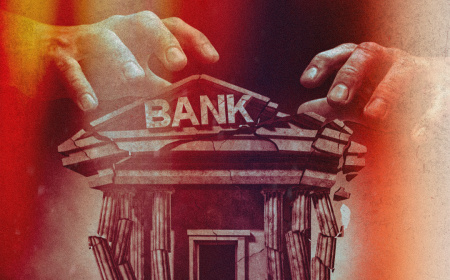
A Fiscal Time Bomb Ticking Underneath
While the president continues to speak in superlatives about growth and prosperity, the Maldives is sinking deeper into debt. The International Monetary Fund (IMF) has repeatedly classified the country at high risk of debt distress, warning that public finances are deteriorating, deficits are ballooning, and debt sustainability is collapsing.
But instead of stabilising the economy, the government has doubled down on costly, opaque megaprojects. State-owned enterprises are already drowning in liabilities and are being used as off-balance-sheet borrowing machines to disguise the true scale of national debt. This is not economic management. It is creative accounting bordering on fiscal malpractice.
Meanwhile, diversification initiatives like bunkering and fisheries reforms have produced a fraction of their promised revenue. The gap between projection and reality has become a defining feature of this government: inflated numbers, muted results.
Foreign Policy in a State of Whiplash
Muizzu came to power riding an anti-India wave, promising to “reclaim sovereignty.” What the public received instead was a foreign policy driven by economic desperation. After months of strained diplomatic ties with New Delhi, the government quietly returned to India for financial life-support, debt rollovers, currency swaps, and a USD 565 million credit line.
Simultaneously, Beijing remains positioned as a crucial partner, exposing the Maldives to geopolitical tug-of-war at a time when economic vulnerability should demand stability, not theatrics.
Far from a strategic recalibration, Muizzu’s foreign policy has become reactive, inconsistent and designed primarily to manage political optics rather than national interest.
Democratic Backsliding Behind Closed Doors
While infrastructure promises stall, the government has succeeded rapidly in one area: restricting democratic freedoms.
The new media regulation law, universally condemned by journalists, rights groups and international observers, hands the state unprecedented power to muzzle reporters, shut down outlets, and intimidate critics. It represents one of the most dramatic erosion of press freedom since multiparty democracy began in 2008.
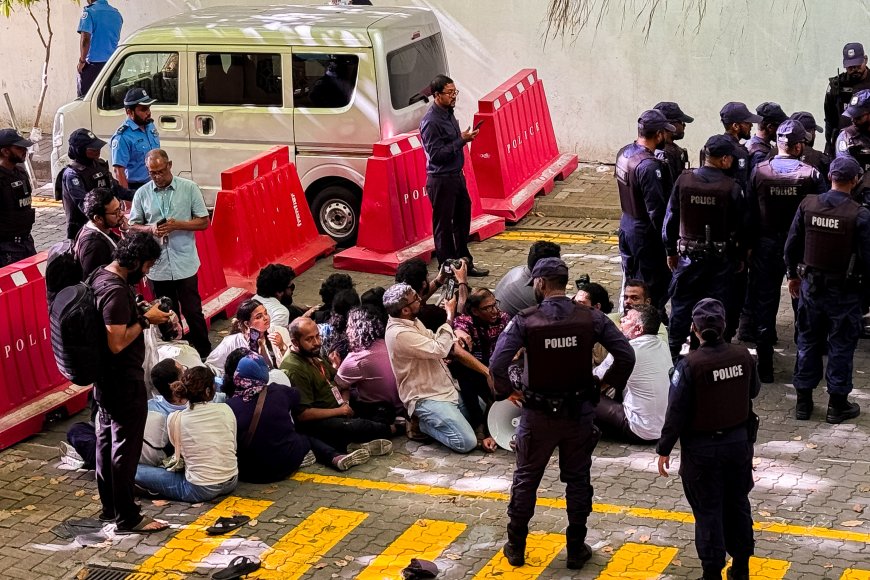
Add to that growing politicisation of state institutions, increased pre-trial detentions, shrinking space for dissent, and selective transparency on major deals. The pattern is unmistakable: a government building physical islands while dismantling democratic ones.
Social Stability Is Fraying - Not Strengthening
Behind the grand announcements lies a nation struggling with rising drug use, escalating youth crime, overcrowded prisons, and deepening cost-of-living pressures. Despite high-profile anti-drug raids and tough rhetoric, overdose cases continue to rise and communities feel increasingly unsafe.
Meanwhile, the administration’s answer to social fragility has leaned heavily on surveillance, enforcement, and punishment, not on prevention, opportunity or systemic reform.
Two Years In: A Government Already Out of Excuses
At the midpoint of his presidency, Muizzu can no longer blame predecessors, process delays, or “upcoming phases.” Two years is long enough to reveal the character and competence of any administration and this one is showing neither.
What emerges from an investigation of these past 24 months is a presidency defined by:
-
outsized promises with undersized delivery
-
infrastructure fantasies with no fiscal grounding
-
a tightening grip on media and democratic institutions
-
rising debt masked by opaque financing structures
-
and a foreign policy shaped more by necessity than vision
Muizzu promised to change Maldives forever. Two years on, he has but not in the way he intended. The country is now more indebted, more uncertain, more restricted and more vulnerable than when he took office.
Unless this administration confronts reality, not its own propaganda, the next two years may bring consequences far more severe than stalled projects and broken promises. They may bring a full-blown national crisis.






What's Your Reaction?