


THE COVER-UP: IMF Report Exposes Impending Economic Stagnation and Subsidy Cuts
The government is taking victory laps over short-term debt repayments, but the IMF’s latest statement pulls back the curtain on a looming economic crisis. Behind the diplomatic phrasing lies a harsh reality: the Maldives is staring down an economic stall, and everyday citizens are about to foot the bill.
While the administration boasts about robust tourism, the IMF confirms that real GDP growth is projected to collapse to about 1 percent in 2026. This is effective stagnation for a nation reliant on imports. The government's failure to diversify means external shocks instantly cripple us. Why has our economic buffer been so poorly managed that a tourism dip drops us to near-zero growth?
Worse yet, the IMF explicitly calls for a "systematic expenditure review of subsidy schemes" using "proxy means testing." This is code for widespread cuts to public subsidies, particularly on electricity and fuel. The government is being pushed to phase out universal subsidies, meaning thousands of middle-class Maldivians already struggling with inflation could soon be cut off from vital state support.
To distract us, the government heavily publicized its timely repayments of sukuk bonds, but the IMF explicitly warns that "the risk of overall and external debt distress remains high." Settling immediate bills has not solved our structural insolvency. The government is essentially paying off credit cards with temporary bilateral lifelines, merely kicking an enormous debt can down the road.
Our financial safety net is also being cannibalized. The report notes that the "sovereign–bank nexus remains elevated," warning of macro-financial risks. Translated, this means local banks are overly exposed to government debt. The state is borrowing heavily from domestic banks to keep itself afloat, which crowds out the private sector making it nearly impossible for local small businesses to get loans and risks destabilizing the banking system.
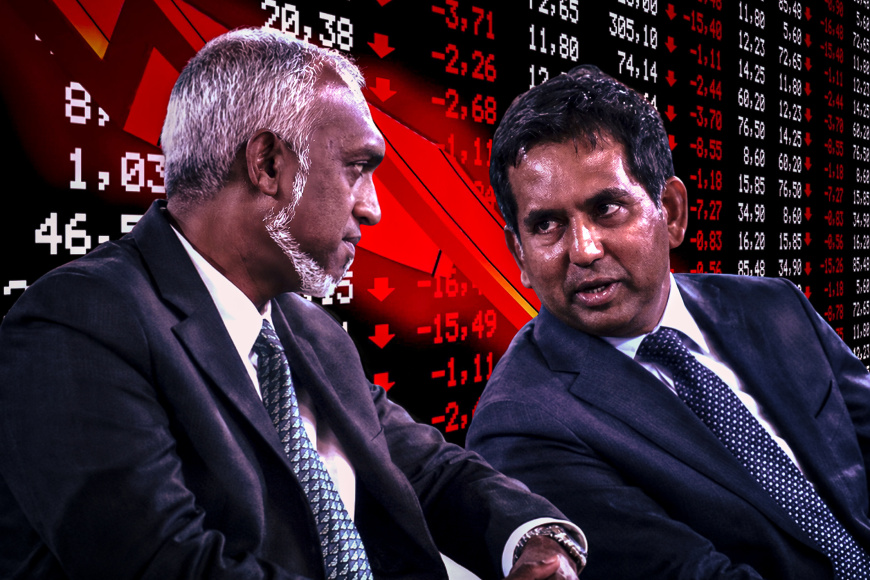
Finally, the IMF directly flags State-Owned Enterprises (SOEs) as a "material source of fiscal and governance risk." For years, SOEs have been used as vehicles for political appointments and opaque spending. The IMF’s insistence on "stronger oversight" is a direct indictment of the government’s ongoing failure to clean up corruption and mismanagement within these state bodies. People demand immediate answers from Finance Minister Zareer and Governor Munawar: Who loses their subsidies first, and how does a 1% economy survive?








What's Your Reaction?